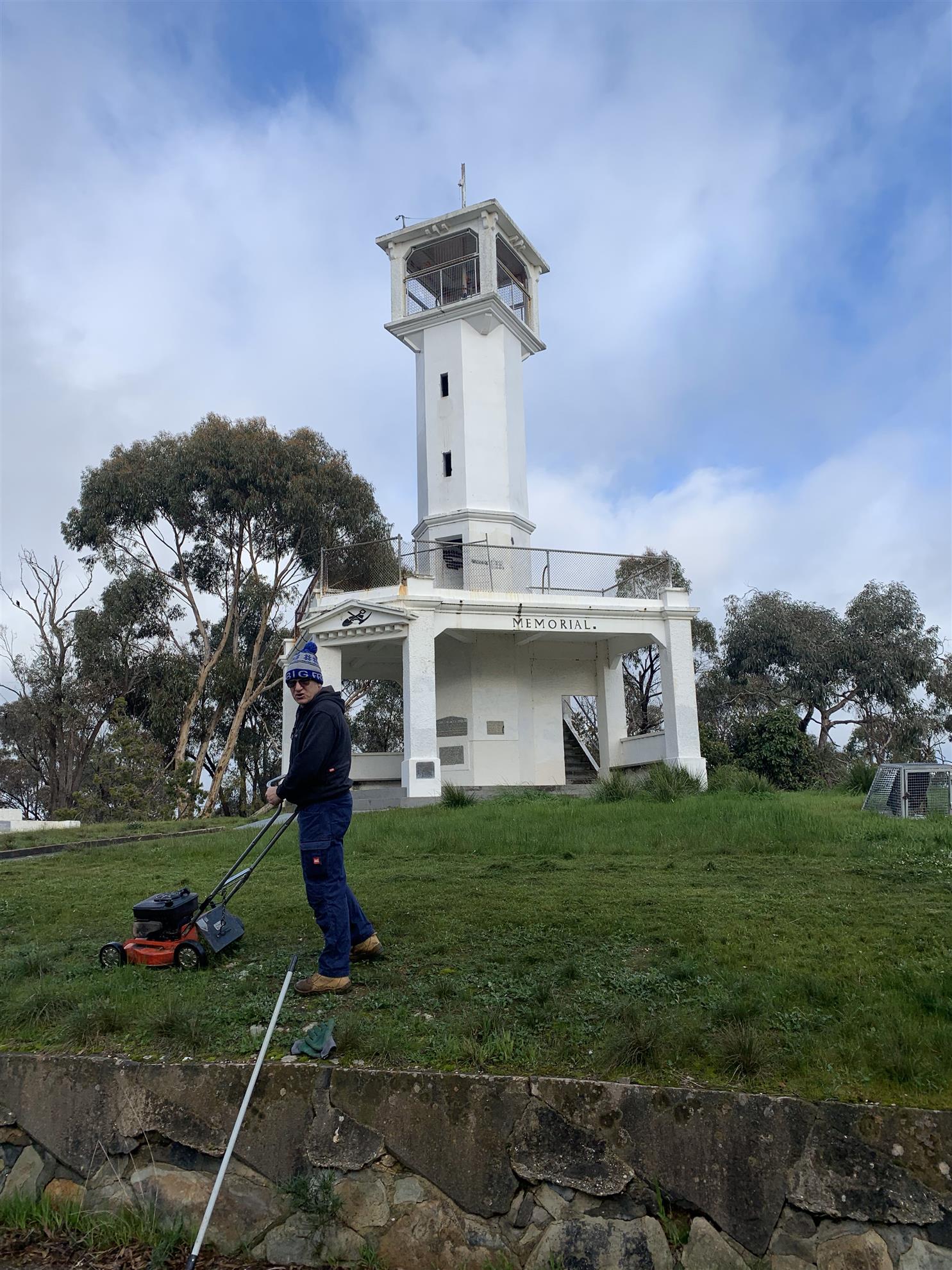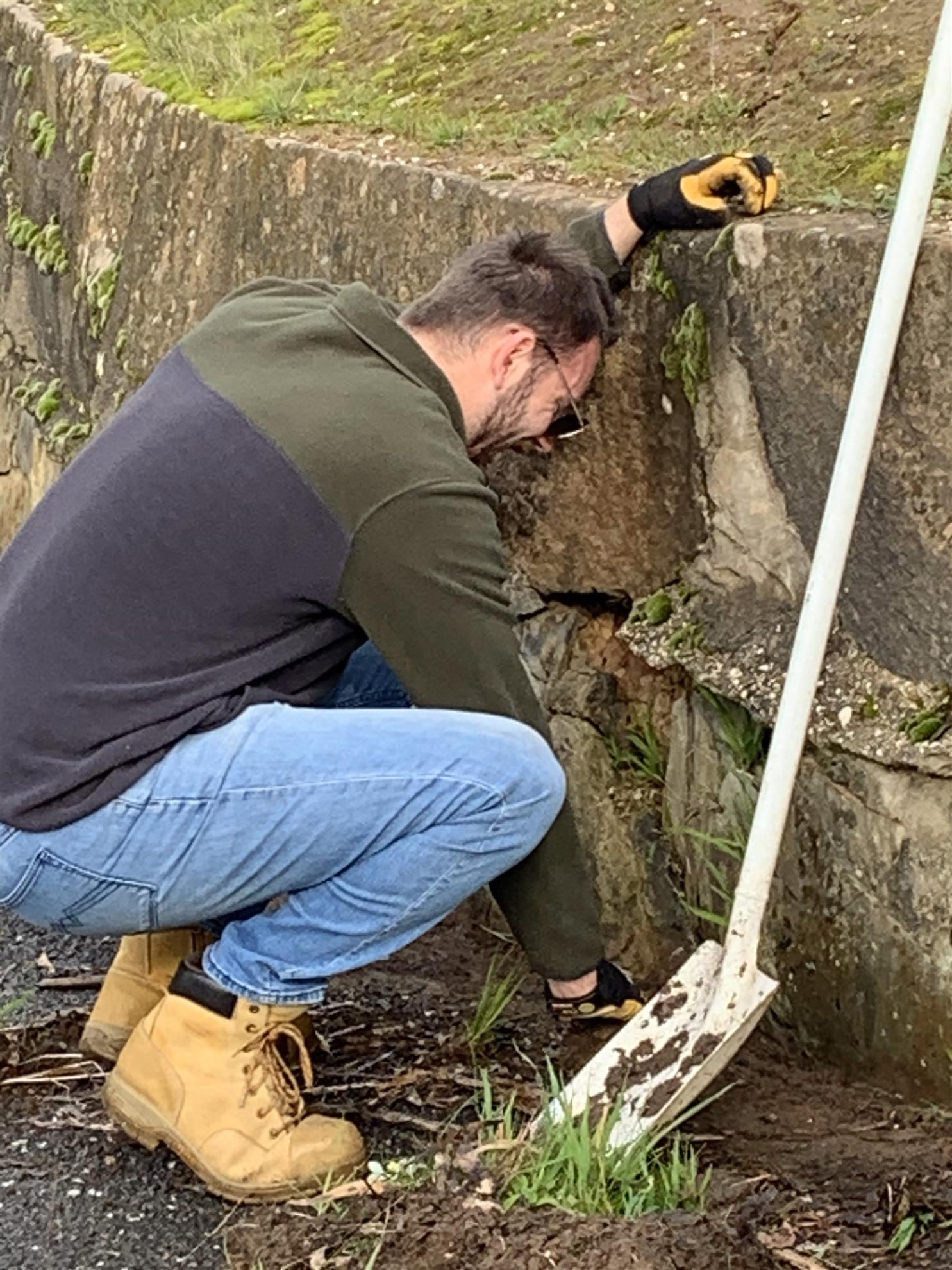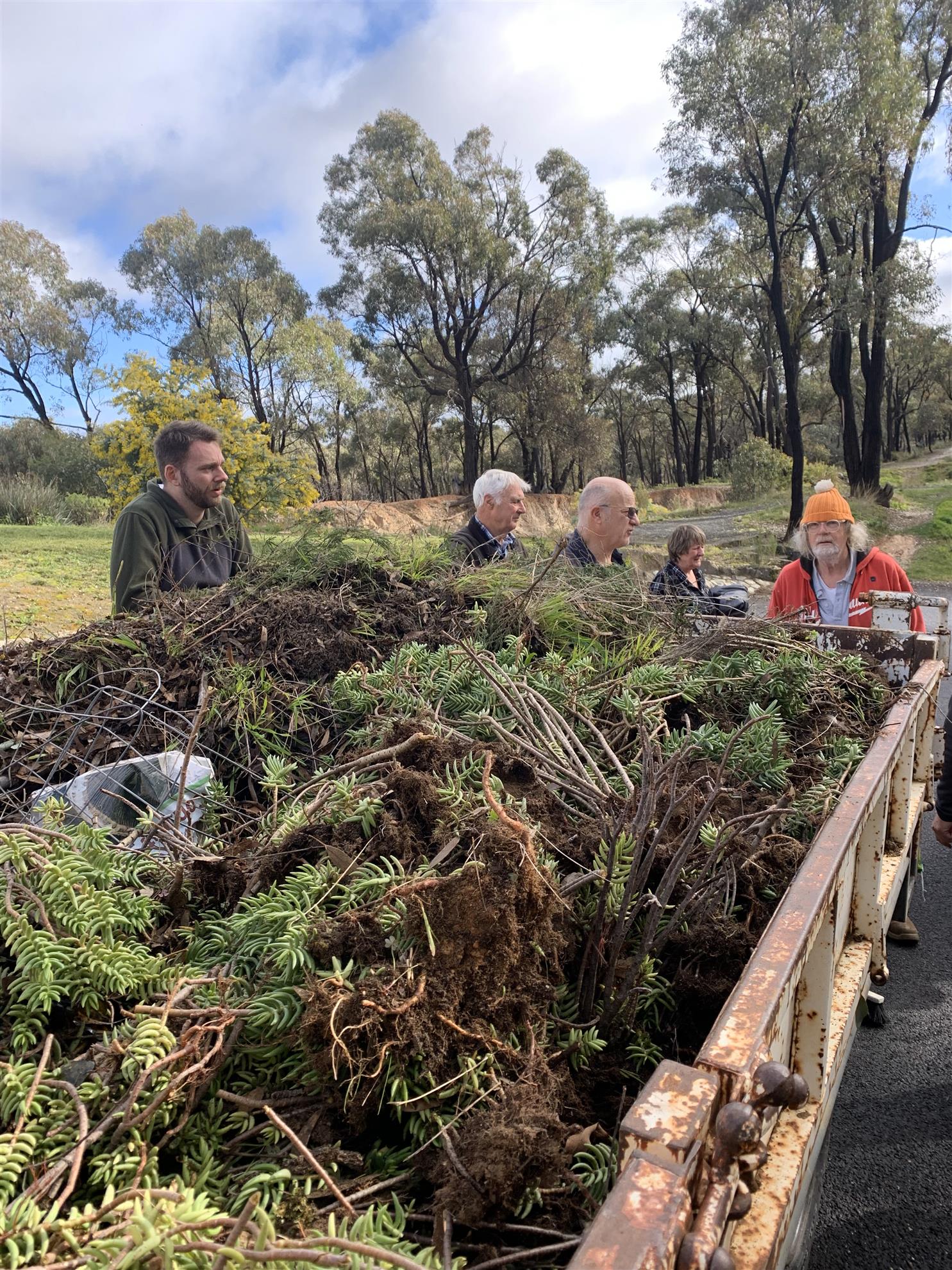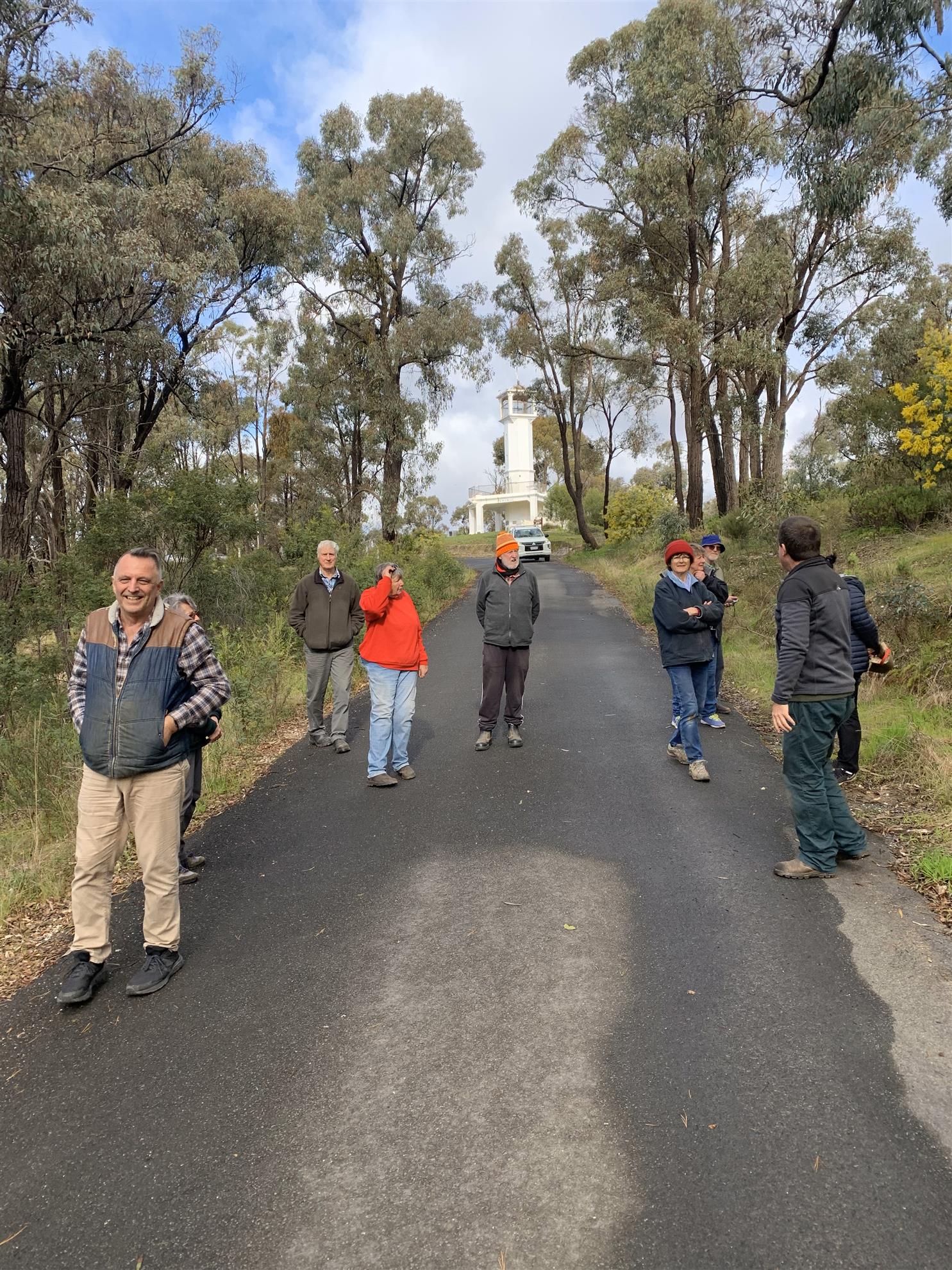

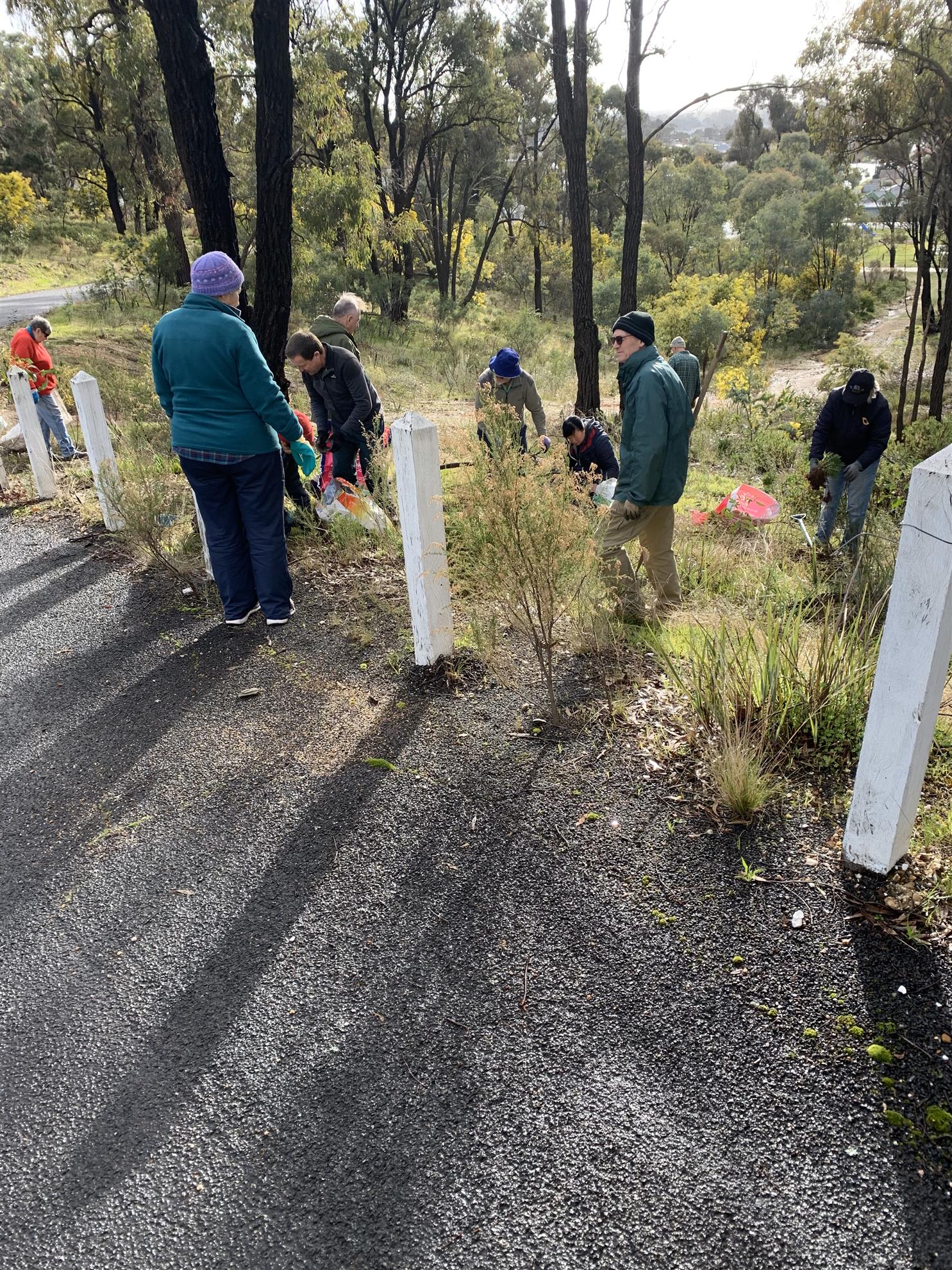
 27 members of the "Friends of the Tower" group spent some time on Sunday to clean up rubbish and weeds from the tower area. Thanks to club members Garry, Anthony, Harold, John Caulfield, Lowan, Adrian, Martin and Riley for representing the club at the event. The next clean up is planned for July 29th.
PDG Anthony has discovered an article on the establishment of the Tower that appeared in the "Argus" Newspaper in 1933. The article starts...
MARYBOROUGH, Sunday. – On an autumn day 79 years ago three wandering fossickers found gold at the White Hills, then portion of a vast run controlled by the Simson family of squatters in Central Victoria. Within a few months the rich goldfields of Maryborough, Dunolly and Alma were opened. Today, in brilliant sunshine, descendants of the diggers of the 50's a and 60's gathered in thousands at Maryborough for the unveiling of a striking memorial to the men and women who laid the foundations of a thriving town.
See "Read more..." for the rest of the article and more pix of the working bee.
Bristol Hill, an eminence overlooking the town has certainly not carried such a throng of people since the days, long ago, when diggers assembled and scarred its quiet slopes. Townspeople were reinforced by residents of the agricultural areas, and by those from dreaming villages which once were throbbing goldfields. There were also many visitors from Melbourne and other parts of Victoria.
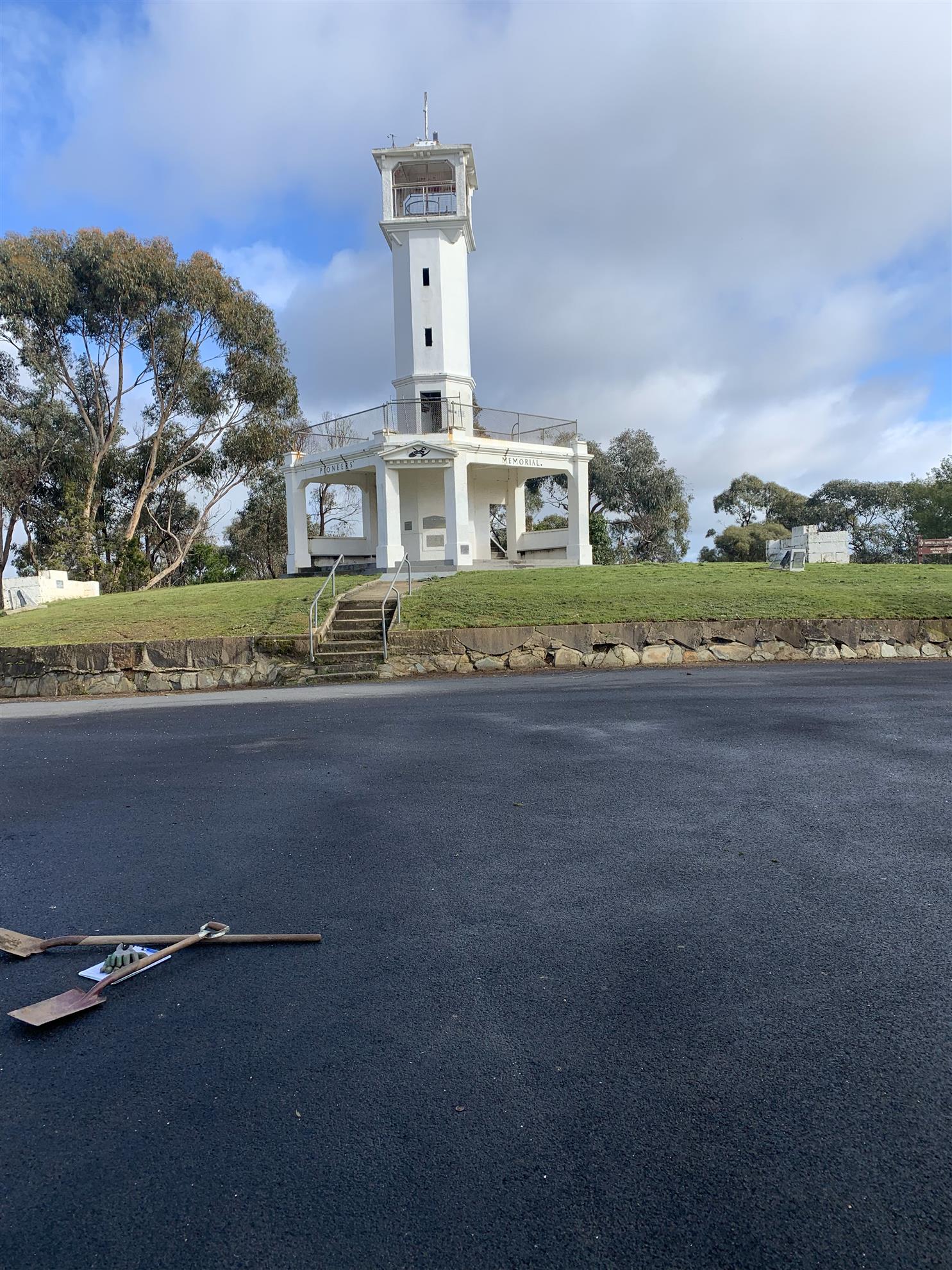
The memorial tower is an adequate monument. Erected at a cost of about £800, it may be regarded as a half-brother to the Eureka memorial at Ballarat which commemorates an historic event which occurred about six months after Maryborough had been proclaimed a town and had been named by Mr Daly, a goldfield commissioner after his native town in Ireland. Surmounting a massive base are six large square pillars above which rises an imposing tower, which, 50ft. above the crest of the hill, commands a view of the whole of Maryborough and of the rich Charlotte plains. A remarkable feature of the tower is a spiral stairway of stone. This was once portion of the large Maryborough gaol, which his now been dismantled and turned into a high school, and into comfortable homes. Decorative features of the memorial include representations of a pick, a shovel, and a mining dish, and several verses from a poem by Henry Lawson.
The first verse is as follows -
"Oh, who would paint a goldfield,
And limn the picture right,
As we have often seen it
In early morning's light!"
Resting place of Pioneers.
Altogether the memorial is noble and distinctive. It rests on a pick-scarred hill which diggers" of a later day - the former soldiers of Maryborough - declare reminds them strongly of certain hills on Gallipoli. The memorial looks down directly upon the first Maryborough cemetery, a small enclosure which was closed more than 60 years ago. Almost all the graves lack head stones, but a cross 20ft in length by 10ft in width has been built in the centre of the burial-ground. This cross is composed of white quartz set in concrete. It lies flat on the ground, but stands out strikingly in the old burying-place. Today a wreath was placed on the cross in memory of the unknown pioneers resting there.
Preceded by the Maryborough Brass Band a procession composed principally of visitors from Melbourne marched to Bristol Hill where the assemblage was welcomed on behalf of the Pioneers Memorial Committee by the chairman (Mr P. S. Fisher).
After an address had been given by a representative of the committee (Mr. H. V. Nunn) who said that the memorial was intended to do homage to pioneers of all nationalities the president of the Maryborough Old Boys and Girls Association (Mr. W. Morris of Melbourne) said that old residents everywhere look pride in the memorial. No history of Australia would be complete without adequate reference to the diggers of the early days and no history of the diggings could neglect the rich Maryborough district which had produced vast quantities of gold, including the famous "Welcome Stranger" nugget. Descendants of fossickers of the district had made their marks in science, art, music and literature throughout Australia.
"This memorial really pays tribute to the whole of the pioneers of Australia," said Mr. Gibson, M. H. R. "It was conceived firstly to commemorate the pioneers; secondly to beautify the town; and thirdly to relieve unemployment. All of these objectives have been achieved." He recalled that it had been claimed that gold was first found in Victoria in 1850 at Amherst, seven miles from Maryborough. The pioneering fossickers had faced difficulties which would probably have appalled many people of to-day.
The official opening ceremony was performed by Mr. Frost, M.L.A. who paid a warm tribute to the pioneers who he said had been courageous and splendidly independent. He mentioned the work of clergymen and doctors who had gone to the digings and established churches and hospitals. "The golden age of Maryborough has not yet passed," he added. When the deep leads and the quartz reefs are exploited much gold will be found and unemployment will be banished.
Records Placed in Vault.
A cylinder containing records of the occasion, including a copy of "The Argus" of Saturday, containing in article on Maryborough pioneers, was placed in the vault of the tower by Mrs. R. Wilson, aged 85 years, who has lived in the town for almost the whole of her life.
The ceremony concluded with the formal presentation of the memorial to the mayor (Councillor J. R. Bryant) by Councillor S. Poole, on behalf of the Pioneers' Memorial Committee, and of the Unemployment Relief Committee, the two organizations which raised the funds necessary for the erection of the memorial. To-night the memorial is flood lit.